


If you're running organic-certified beans, the cleaning products touching that equipment are part of the certification chain too — an organic coffee that's brewed through equipment cleaned with a non-approved chemical isn't fully consistent with an organic system. Even outside formal certification requirements, plenty of cafés and home users simply prefer a biodegradable, lower-impact clean. Cafetto has built organic-certified and eco-formulated versions across most of its core categories, so switching doesn't mean giving up a category of cleaning.
What the Certifications Actually Mean
- ACO (Australian Certified Organic) — registered as an allowed input for use in organic systems. This is the certification relevant if your café or roastery holds organic certification and needs every input, including cleaning products, to comply.
- OMRI (Organic Materials Review Institute) — an international listing confirming a product meets organic-use standards, relevant for products sold or used across export/import markets.
- NSF — confirms a product is tested and safe for commercial food service environments (this isn't specifically an "organic" mark, but it's the food-safety certification that sits alongside the organic ones on several products).
- Biodegradable formulation — several products use surfactants specifically formulated to be readily biodegradable, independent of organic certification.
The Organic-Certified Product, by Category
| Category | Standard product | Organic-certified equivalent |
|---|---|---|
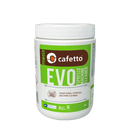
| Traditional espresso cleaning | Espresso Clean® | EVO®, Tevo® Mini/Maxi Tablets |
| Automatic machine cleaning | F20/F23/T60/T90/T32/E29/N10/J25 Tablets | R16 Tablets |
| Milk cleaning | MFC® Blue | MFC® Green, MFC® Powder Eco |
| Descaling | Renew Descaler | Organic Descaler, LOD® Green |
| Grinder cleaning | Grinder Clean | Organic-certified formulation across the Grinder Clean range |
|
Capsule/brewer/tea |
— | Capsule Clean, Brew Clean, Tea Clean are formulated within the organic-certified range |
Does Switching to Organic-Certified Cost You Cleaning Performance?
No — this is a common assumption worth addressing directly. EVO® was the first espresso machine cleaner certified by an organic certification body, and Tevo® the first organic-certified tablet, both built to match the cleaning performance of Cafetto's standard commercial range rather than as a lighter-duty alternative. LOD® Green, similarly, is tested as roughly 9 times more effective at descaling than plain white vinegar. The certification changes the ingredient sourcing and biodegradability profile, not the cleaning result.
FAQ
Do I need organic-certified cleaning products if my beans aren't organic-certified? No — it's only a compliance requirement if your business holds organic certification. Plenty of non-certified cafés and homes choose the organic range anyway for the biodegradable formulation.
Is "organic-certified cleaner" the same as "eco-friendly"? Related but not identical — organic certification (ACO/OMRI) is a formal standard around inputs allowed in certified organic systems; biodegradability is a separate, related property that several (not all) products in the range also carry.